English headline:USPS Files 2027 Rates: a 5.9% Parcel Increase and an 11% Permanent Fuel Surcharge
Meta description:USPS has asked regulators to raise Priority Mail, Ground Advantage and Parcel Select prices by 5.9% on average from January 17, 2027, and to convert its temporary transportation surcharge into a permanent 11% fuel surcharge. For light-parcel sellers, the cheapest last-mile lane is becoming both more expensive and more predictable in its increases.
On November 12, the U.S. Postal Service filed a 2027 rate adjustment request with the Postal Regulatory Commission (PRC) that would raise Priority Mail, Priority Mail Express, USPS Ground Advantage and Parcel Select prices by an average of 5.9%, effective January 17, 2027. At the same time, the 8% transportation-related increase introduced in April would be converted into a permanent fuel surcharge, with a further 3 percentage points added in light of recent fuel prices — 11% in total. Two days earlier, USPS reported a net loss of $6.5 billion for fiscal year 2026.
Three Details in the Filing
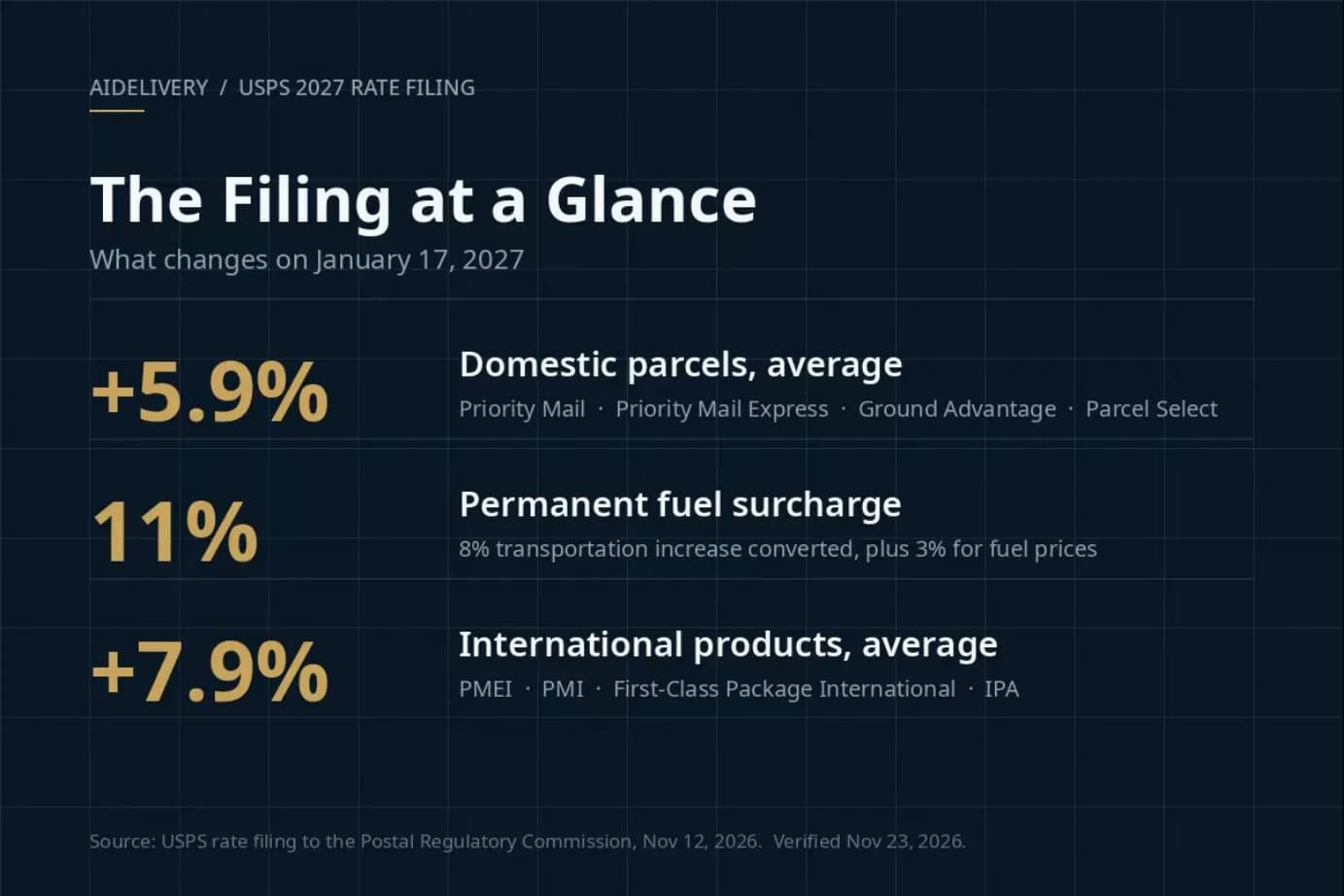
· Domestic parcels rise 5.9% on average. The increase covers the four core products: Priority Mail, Priority Mail Express, USPS Ground Advantage and Parcel Select.
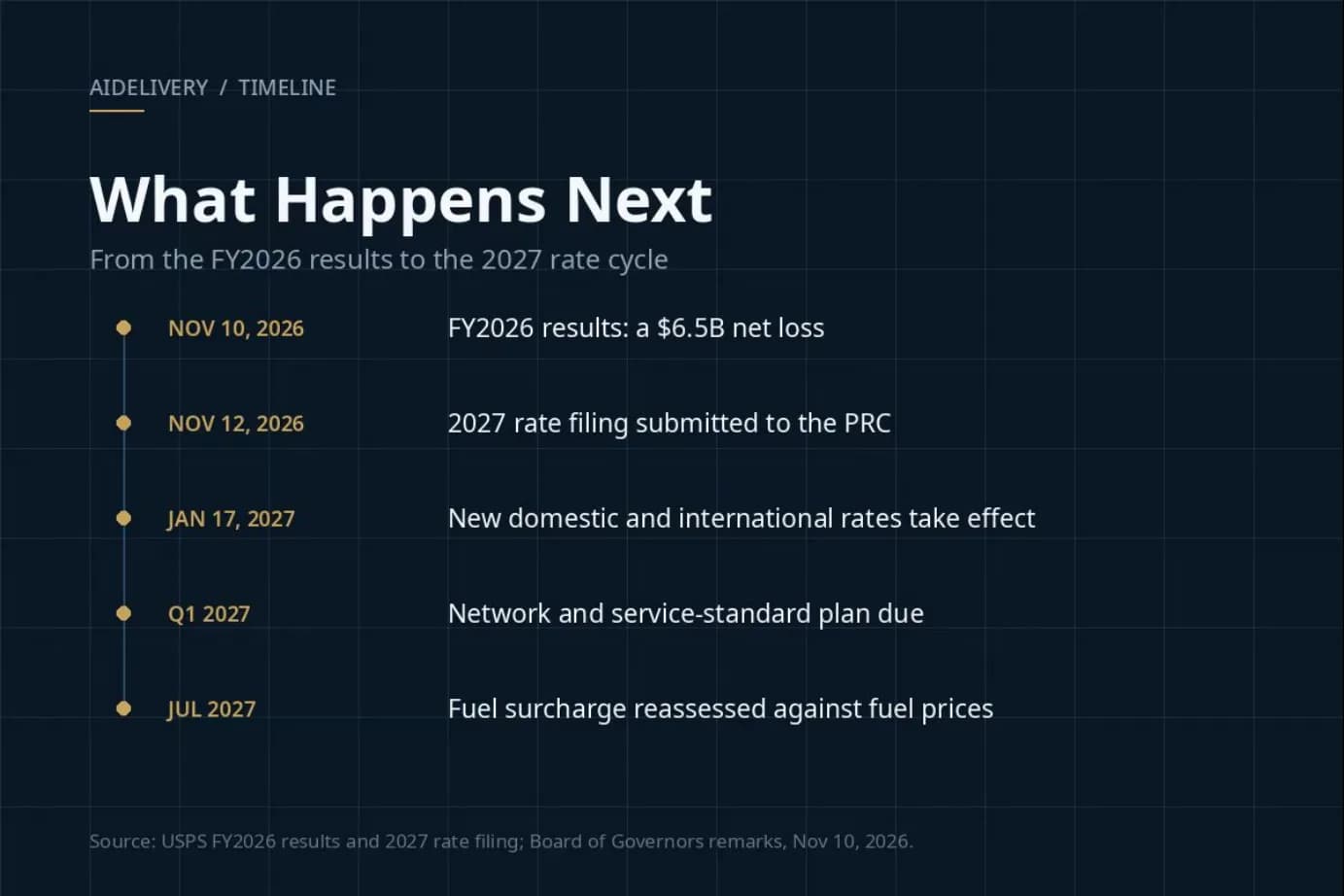
· The fuel surcharge moves from temporary to permanent. The 8% transportation-related increase becomes an 8% fuel surcharge, with 3 additional percentage points bringing the total to 11%. USPS said it will reassess the surcharge in July 2027 based on fuel prices in the first half of the year.
· International products rise further. Priority Mail Express International, Priority Mail International, First-Class Package International Service and International Priority Airmail will increase by an average of 7.9%.
Volume Down, Price Up
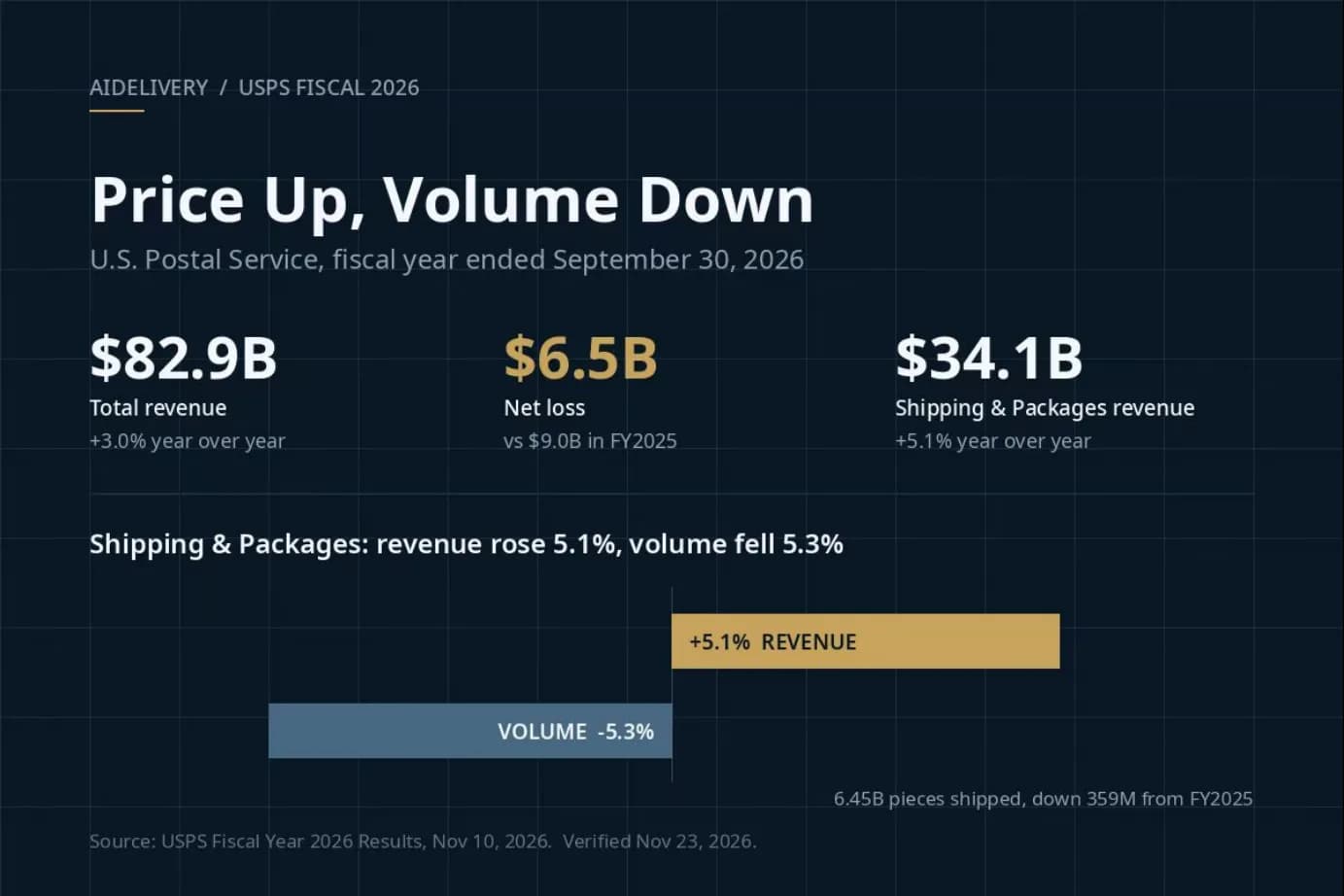
For fiscal year 2026, USPS reported total operating revenue of $82.9 billion, up 3.0% year over year, and a net loss of $6.5 billion, compared with $9.0 billion the prior year — a $2.5 billion improvement. The more revealing number sits in the parcel business: Shipping and Packages revenue reached $34.1 billion, up 5.1%, on volume that fell 5.3%, or 359 million fewer pieces. Revenue growth was driven almost entirely by price, not by volume.
That also explains why a rate filing and a network overhaul are arriving together. At the Board of Governors meeting on November 10, management said the agency faces a financial cliff once the retiree health benefits fund is exhausted within the next five years. With pricing and days of service constrained by statute and regulation, the remaining levers are the size of the retail and office footprint and service standards for non-First-Class Mail. A fully developed plan is expected in the first quarter of 2027.
What It Means for Parcel Fulfillment
The sellers most exposed are those using USPS Ground Advantage as their primary last-mile lane for light parcels. These shipments are low-ticket and price-sensitive, so the 5.9% increase combined with the 11% fuel surcharge lands directly on per-unit margin. The Parcel Select adjustment will travel through consolidators and zone-skipping providers into quotes for economy last-mile service.
The timing is easy to overlook but matters. Because the new rates take effect on January 17, 2027, the period from December 2026 through early January 2027 is a rate-lock window. Sellers finalizing first-quarter inventory plans should lock warehouse space and last-mile quotes during that window rather than after the filing clears the PRC.
Three Actions for Sellers
1. Recalculate your USPS exposure. Segment orders by weight and dimensions, then measure what share runs on Ground Advantage and Parcel Select. Only then does the increase translate into a specific margin impact.
2. Build a carrier mix, not a single lane. Keep USPS where its cost advantage holds for light parcels, and maintain a commercial backup for peak surges and service disruptions.
3. Write rate changes into your pricing mechanism. In contracts with fulfillment and last-mile providers, specify how rate adjustments pass through and how much advance notice is required, so peak-season repricing does not arrive unannounced.
Sources: USPS, Fiscal Year 2026 Results (November 10, 2026); USPS, Shipping Price Adjustments for 2027 (November 12, 2026); USPS Board of Governors Remarks (November 10, 2026). Verified November 23, 2026.